Advice
5 Signs You Need a Rent Tracking App
Updated July 31, 2026 · 5 min read
When you bought your first rental property, tracking rent was easy. One tenant, one payment, one date to remember. You kept it in your head, maybe wrote it in a notebook. It worked because there was almost nothing to track.
But things change. You pick up a second property. A tenant starts paying late. You spend 20 minutes looking for a bank statement from six months ago. Slowly, the mental system stops working, and you don't always notice right away.
Here are five signs that it's time to stop relying on memory and start using a proper tracking tool.
| Sign | What it costs you | What fixes it |
|---|---|---|
| 1. Chasing rent already paid | Tenant trust, and an awkward correction | One status per month and unit, marked the day money lands |
| 2. Four apps to answer one question | Minutes per check, and no single source of truth | All units and statuses on one screen |
| 3. Dreading the 1st | Background stress even when nothing is wrong | A reminder before the due date, then one tap |
| 4. A weekend of detective work at tax time | Hours reconstructing what was never recorded | A year view and an export for your accountant |
| 5. A new property broke your system | Mismatched units and silently wrong totals | A tool where adding a unit needs no setup |
1 You've Texted a Tenant About Rent That Was Already Paid
Chasing rent that already arrived is the clearest sign a landlord has outgrown memory as a system. The sequence is always the same: you check the bank, see no deposit, send the message, and the tenant replies with a screenshot of a transfer from three days ago that never got written down. RentDue prevents it by holding one status per month and unit.
It's awkward. It damages trust. And it's entirely preventable with a system that tracks payment status in one place. If you had marked the payment as received the day it arrived, you'd never send that message.
The cause is not having a reliable place to record "yes, this month is handled."
2 You Can't Answer "Is Everyone Current?" Without Checking Multiple Places
Needing four apps to answer "has everyone paid this month?" means the record lives nowhere in particular. Bank app, email, a spreadsheet, a message thread: each holds a fragment and none holds the answer. A landlord with three units should settle that question in five seconds, which is what a single list of units with a status per month buys you.
A landlord with three units should be able to answer that question in under five seconds. Not five minutes.
If your current setup involves cross-referencing anything, it's a sign you need one central place where all your rental units and their payment statuses live together.
3 You Dread the Start of Every Month
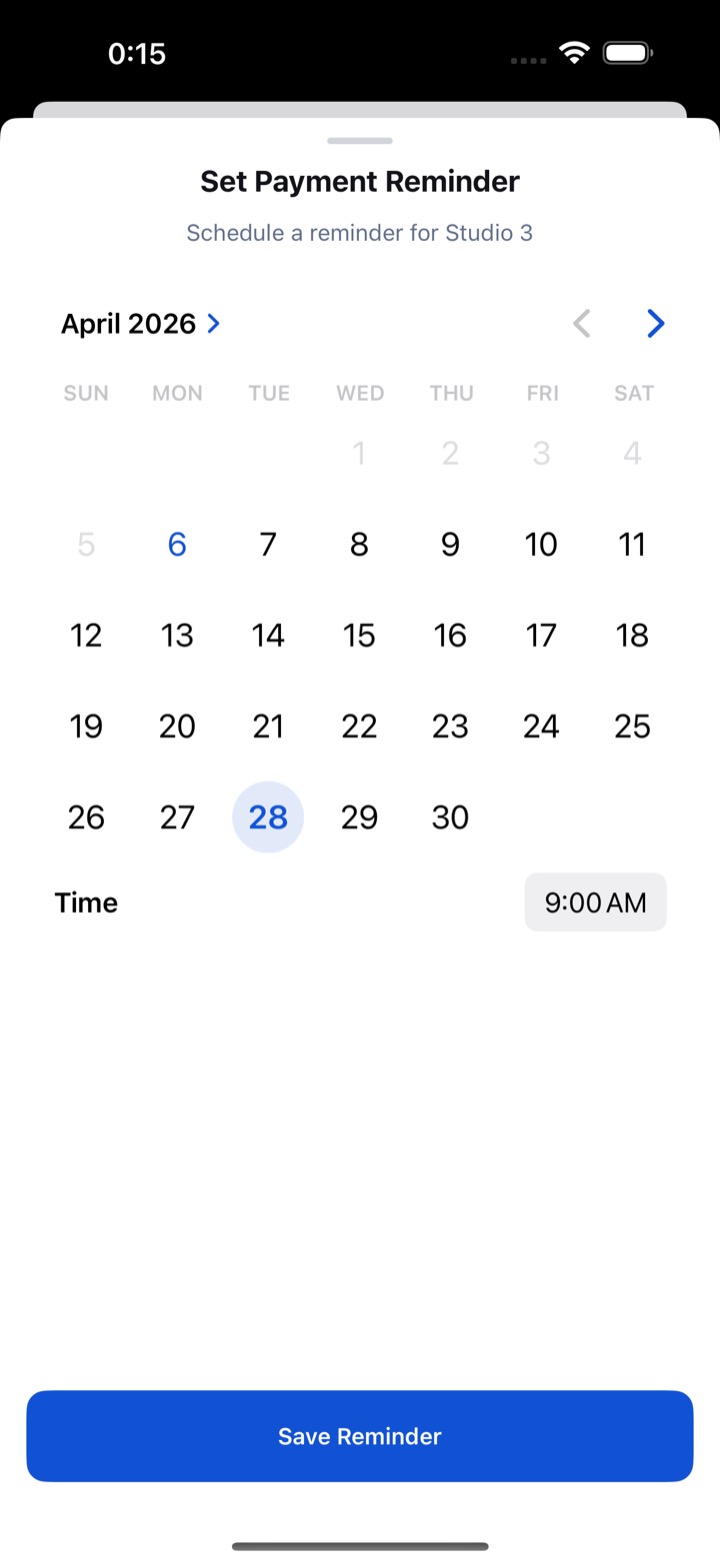
Dreading the 1st of the month is what manual tracking feels like from the inside: the first week turns into a running mental checklist of which unit paid and which tenant promised a different date this time. RentDue replaces that with a reminder before the due date and a single tap to mark the month paid, which drops the mental load to almost nothing.
This kind of background stress eats at you, even when everything is fine. You end up checking your bank account three times a day, trying to match deposits with units. It becomes a chore instead of a quick check.
A tracking app with reminders changes this. You get a notification, you mark the payment, and you move on. The mental load drops to near zero.
4 Tax Season Means a Weekend of Detective Work
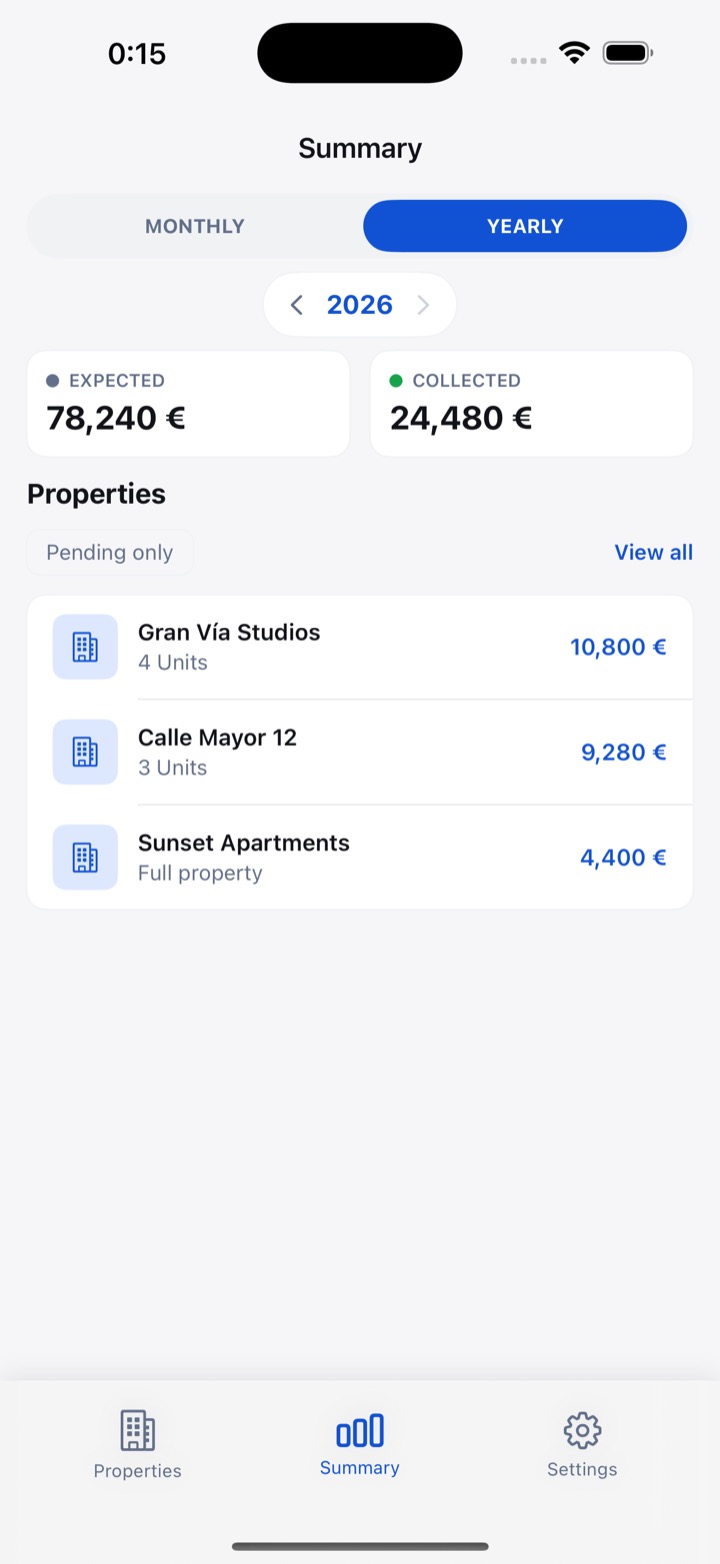
Spending a weekend reconstructing the year at tax time is a bookkeeping failure, not a personality trait. The question an accountant asks — how much rental income did you collect last year — should take seconds, and it does when each month was recorded as it happened. Tax authorities expect landlords to keep those records, not to rebuild them in April.
If the answer involves scrolling through 12 months of bank statements and adding up numbers in a calculator, you're spending hours on something that should take 30 seconds.
A rent tracker that records each month's payments gives you an annual summary on demand. Some let you export that data as a CSV or PDF. That's the difference between a weekend of digging through records and a single tap on your phone.
You're not an accountant. You shouldn't have to act like one just because you rent out a couple of apartments.
Keeping those records is not optional, either: the Internal Revenue Service (IRS) expects landlords to document rental income and expenses, and sets out what that means for residential rental property in Publication 527. Tax rules differ by country, but the expectation that you can show the year does not.
5 You've Added a Property and Your Old System Broke
Adding a property is what breaks most manual systems, because they were never designed to scale. A notebook handles one unit and a spreadsheet survives two, but the third brings mismatched tenants, a missing row and a formula still summing eleven months. RentDue absorbs the new unit without any of that: add the property and the tracking already works.
The free plan, with ads, covers 2 properties with 3 units each, and a third property asks for Pro. If your portfolio grows right there, it's better to know before you install the app.
Every manual system has a breaking point, and adding a new property is usually what triggers it. The system doesn't scale because it was never designed to.
A purpose-built app handles this without you thinking about it. Add a property, add units, and the tracking just works. No formulas to extend, no tabs to duplicate.
What does a rent tracking app actually do?
A rent tracking app records, for every unit and every month, whether rent was paid, is pending or is overdue, and reminds you before the due date. RentDue adds a year view of expected against collected rent, receipts and notes attached to each property, and an export for your accountant. What it deliberately does not do is collect the money: the payment still happens in your bank.
Rent collection platforms move funds and charge a percentage for it. A tracker is the record, not the rail, which is why it can be free for a small portfolio and why it works with cash, transfer or any method your tenant already uses.
Is a rent tracking app worth it for just a couple of properties?
For one or two units a rent tracking app is worth it precisely because the volume is low: with so little to track, nothing forces you to check, and an unpaid month can sit unnoticed for weeks. RentDue is free, with ads, for up to two properties, so the decision costs nothing but the five minutes of setup.
Most guides tell small landlords to start with a spreadsheet and upgrade later. That advice is backwards in one specific way: a spreadsheet holds the same information but never volunteers it, so the month you forget to open it is the month you miss. The detailed case for the smallest portfolios is in rent tracking with just 1 or 2 properties, and the spreadsheet comparison in tracking rent without a spreadsheet.
Past roughly ten units, or once you are handling maintenance tickets and lease renewals for other owners, a tracker stops being enough and real property management software earns its price. RentDue is built for landlords managing their own handful of units, not for agencies.
Do you need property management software for this?
Property management software is built for a different job: portals, maintenance ticketing and lease workflows priced for portfolios of fifty units or more. A landlord with two apartments needs something closer to a checklist, and paying for the enterprise tier to get it is the most common wrong turn after recognising the problem in the first place.
That's overkill for someone with two rental apartments.
What you need is something closer to a checklist than a management platform. Something that lets you glance at your phone and know, within a second, whether this month is sorted.
If any of these five signs hit close to home, switch to a tool that's built for the way small landlords actually work.
Keep reading: How to Track Rent Payments Without a Spreadsheet · Rent Tracking for Landlords With Just 1 or 2 Properties
Try RentDue
RentDue is a rent tracking app for small landlords. No account needed. Works offline. Track who paid this month in seconds. Available on Android and iOS.
Free with ads: 2 properties of up to 3 units each, and exports of the last 2 months. Pro removes the limits and the ads, exports the full year and backs up to your own iCloud or Google Drive.